How Cold Does It Have to Get Before a Concrete Pour Goes Sideways?
A concrete pour booked for late fall in the London area almost always comes with the same question from the client: is it still warm enough? Wildroses Landscaping’s answer isn’t a single number, and treating “above freezing” as the only threshold that matters is one of the more common misunderstandings about cold-weather concrete work.
This guide breaks down why air temperature alone doesn’t settle the question, what happens to concrete that cures in conditions that are too cold, and why every late-season pour comes down to a site-by-site assessment rather than a general rule.
What you'll find below:
- Why air temperature alone doesn’t decide whether a pour can go ahead
- What happens to concrete that cures too cold
- Why late-season concrete work is assessed project by project
It’s Not Just the Air Temperature on Pour Day
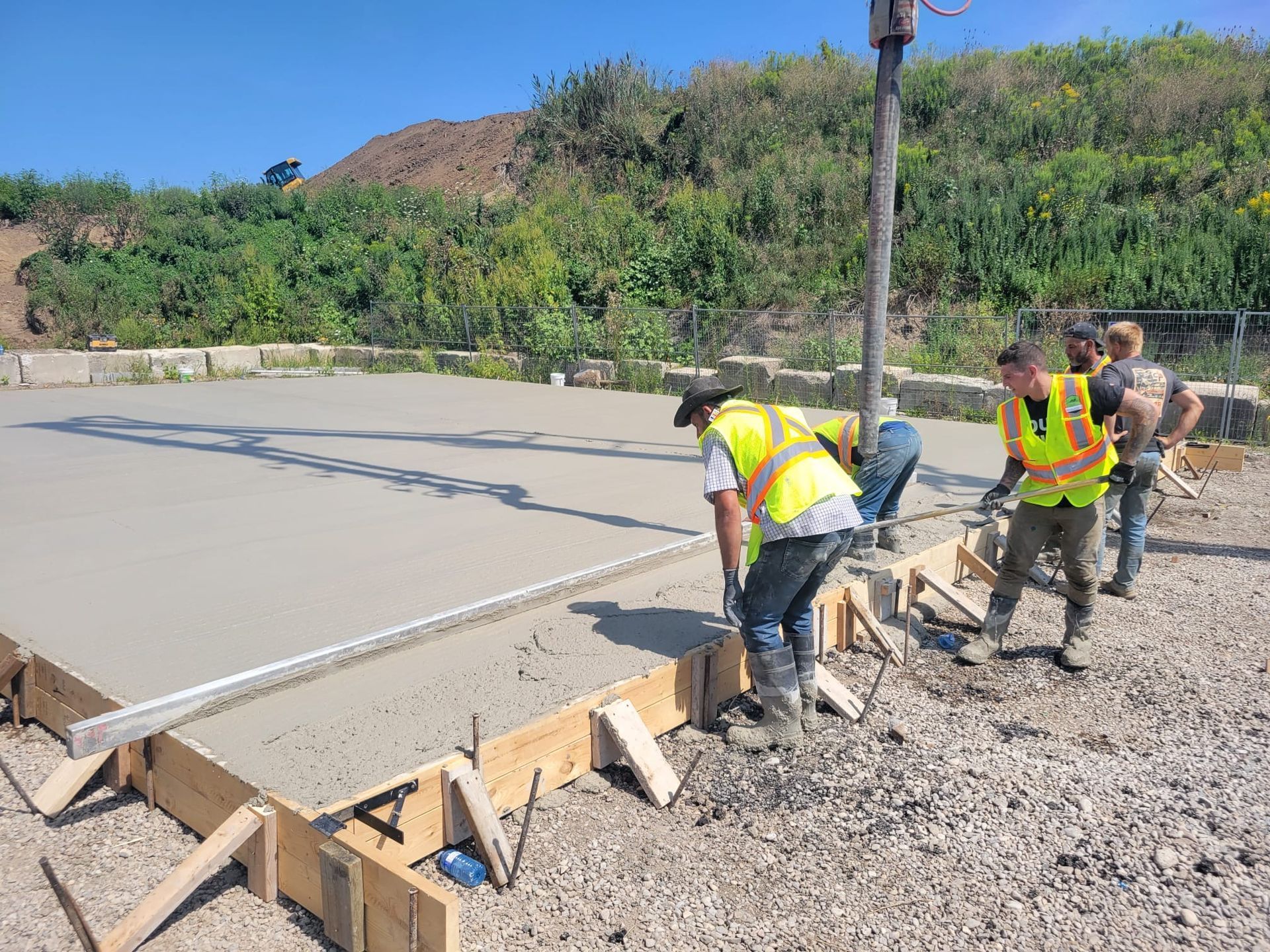
The number that matters most isn’t the air temperature when the truck shows up, it’s whether the concrete can stay above freezing for the first several days while it cures. Fresh concrete generally needs to maintain a minimum internal temperature, commonly cited in the industry as roughly 5°C, for at least the first 48 to 72 hours to develop strength properly. A mild afternoon followed by a hard overnight freeze can undo curing progress even if the daytime reading looked perfectly reasonable.
→ A quick tip to remember: the ground temperature under a slab or footing matters as much as the air temperature above it, since cold ground pulls heat out of fresh concrete from underneath.
What Happens When Concrete Cures Too Cold
Concrete that freezes before it reaches adequate strength doesn’t just cure slowly, it can suffer permanent damage. Ice crystals forming in the mix disrupt the hydration process that gives concrete its strength, which can lead to surface scaling, reduced structural strength, and cracking that shows up months or even years later. This is different from concrete that simply cures slowly in cool weather, which is normal and not a problem on its own.
Why Late-Season Concrete Is Assessed Project by Project
Whether a concrete pour can go ahead late in the season depends on several things at once: the actual weather in the days before and after the pour, ground conditions on the site, the concrete specifications for that particular job, and whether appropriate curing conditions can be maintained. Cold-weather protection measures such as insulated coverings or adjusted mix designs can help in some situations, but they don’t guarantee a pour will be suitable, and they never replace a realistic look at the forecast and the site.
That’s why Wildroses Landscaping assesses each concrete project on its own conditions rather than working from a fixed cutoff date. In some cases, the right call is to pour when conditions allow, and in others it’s to schedule the work for spring.
→ A quick tip to remember: a recommendation to wait for better conditions is about protecting the long-term quality of the concrete, not just the schedule.
Frequently Asked Questions
1. Is there a hard cutoff date for concrete work in the London area?
There’s no fixed calendar date. It depends on the actual weather, ground conditions, concrete specifications, and whether appropriate curing conditions can be maintained, which is why each project is assessed individually.
2. Can concrete poured too cold be fixed after the fact?
Damage from freezing during the early cure is generally permanent. This is why proper temperature management during the pour and cure matters more than trying to address problems afterward.
Planning a Concrete Project Around Real Conditions
Late-season concrete work comes down to the conditions on and around the site, not the calendar alone. Talk to Wildroses Landscaping about your concrete project, and the team will assess whether it makes sense to pour this season or plan it for spring.